Leverage is an offer-call prep kit for software engineers. It gives you the number, the ask, and the exact words before you talk to the recruiter.
This one sentence sets your pay for years. Here is the difference thirty minutes of prep makes when you hear it.
This is not fearmongering, it is arithmetic. The person on the other end runs this call every week; you run it once every few years. One unprepared sentence can quietly cost more than this kit by a hundred to one.
Not a motivational ebook. A practical kit: model the offer, pick the lever, copy the script, and handle whatever the recruiter says next.
Your 30-minute path in, or the emergency one-pager if the call is today.
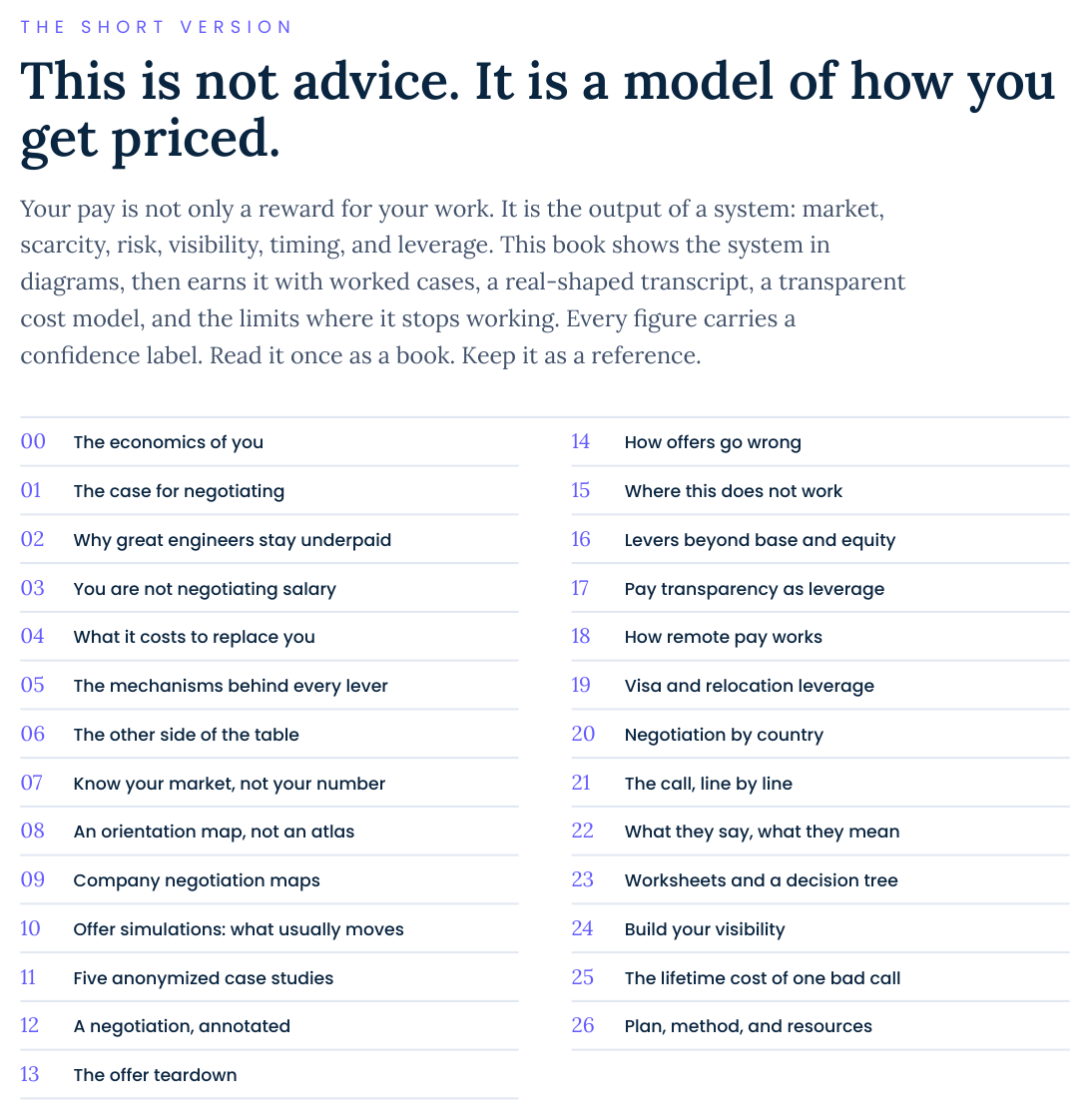
39 pages: the model, real company data, a full annotated negotiation, the mistakes.
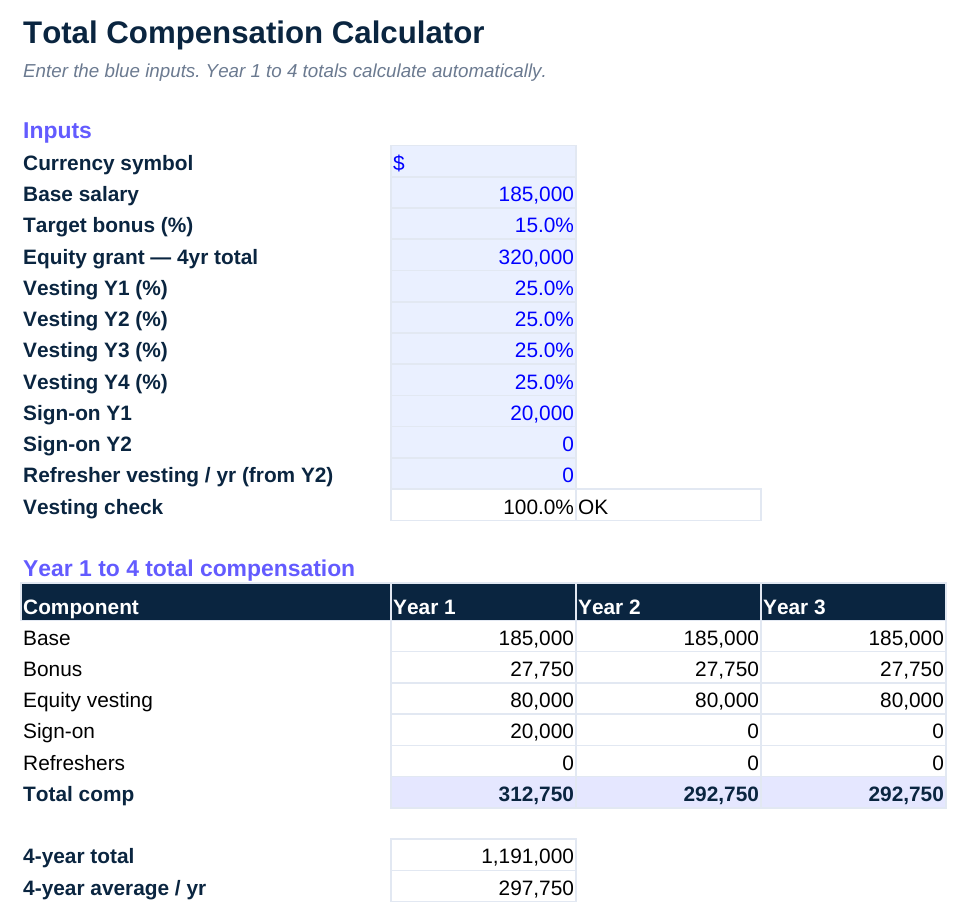
10 tabs of live formulas. Models your comp and tells you what to ask for.
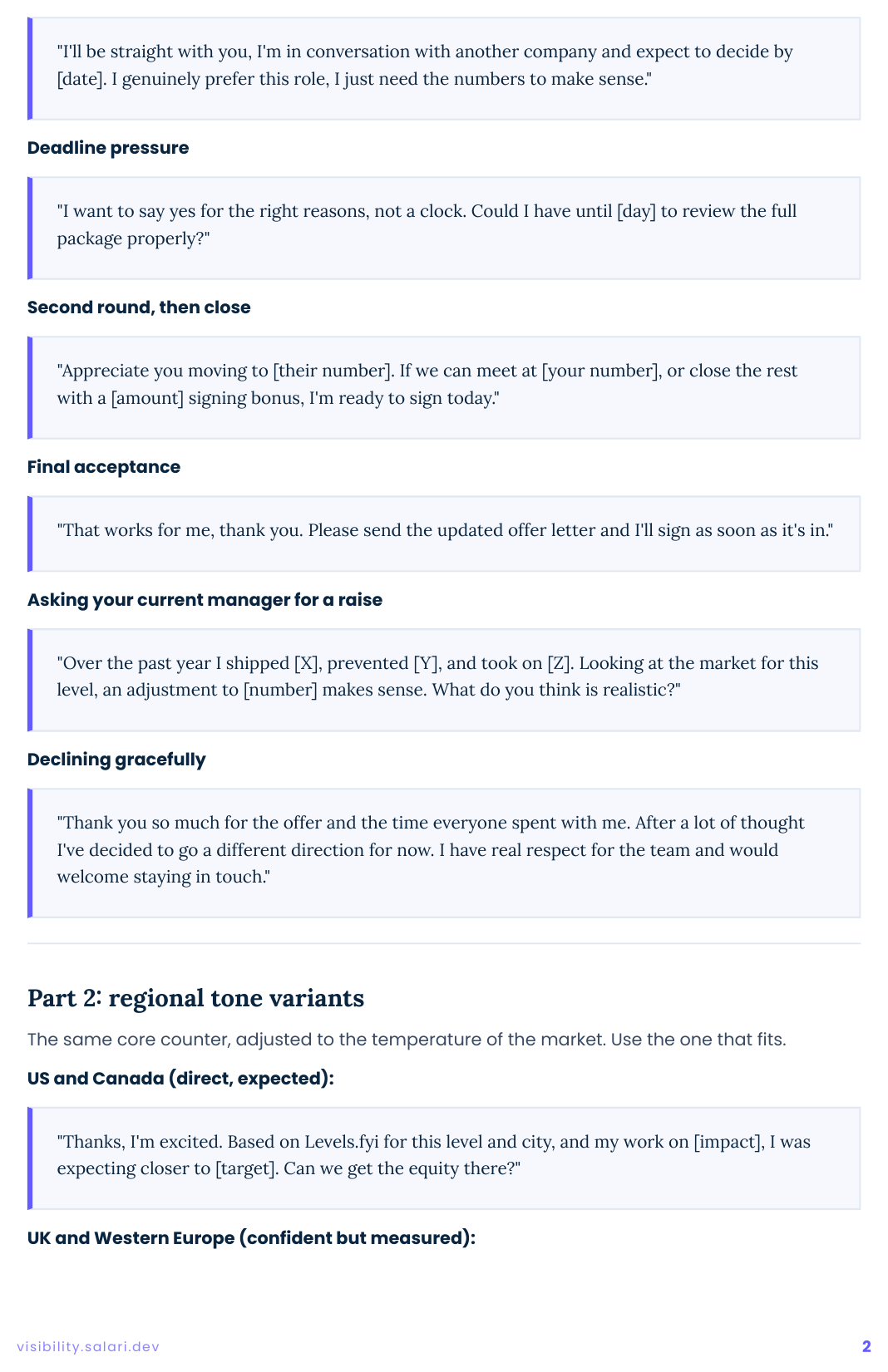
Copy-paste words for every moment, with US, Europe, Japan, India, and remote tones.
The fast way to find your real number before you talk.
Anonymized cases, broken down: what moved, what did not, and why.
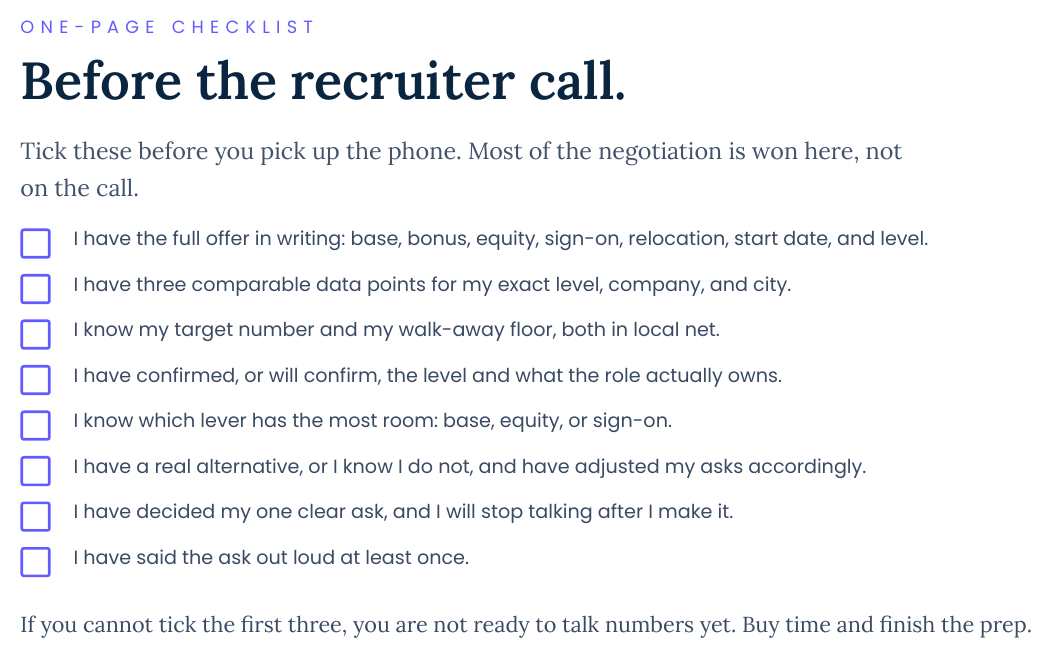
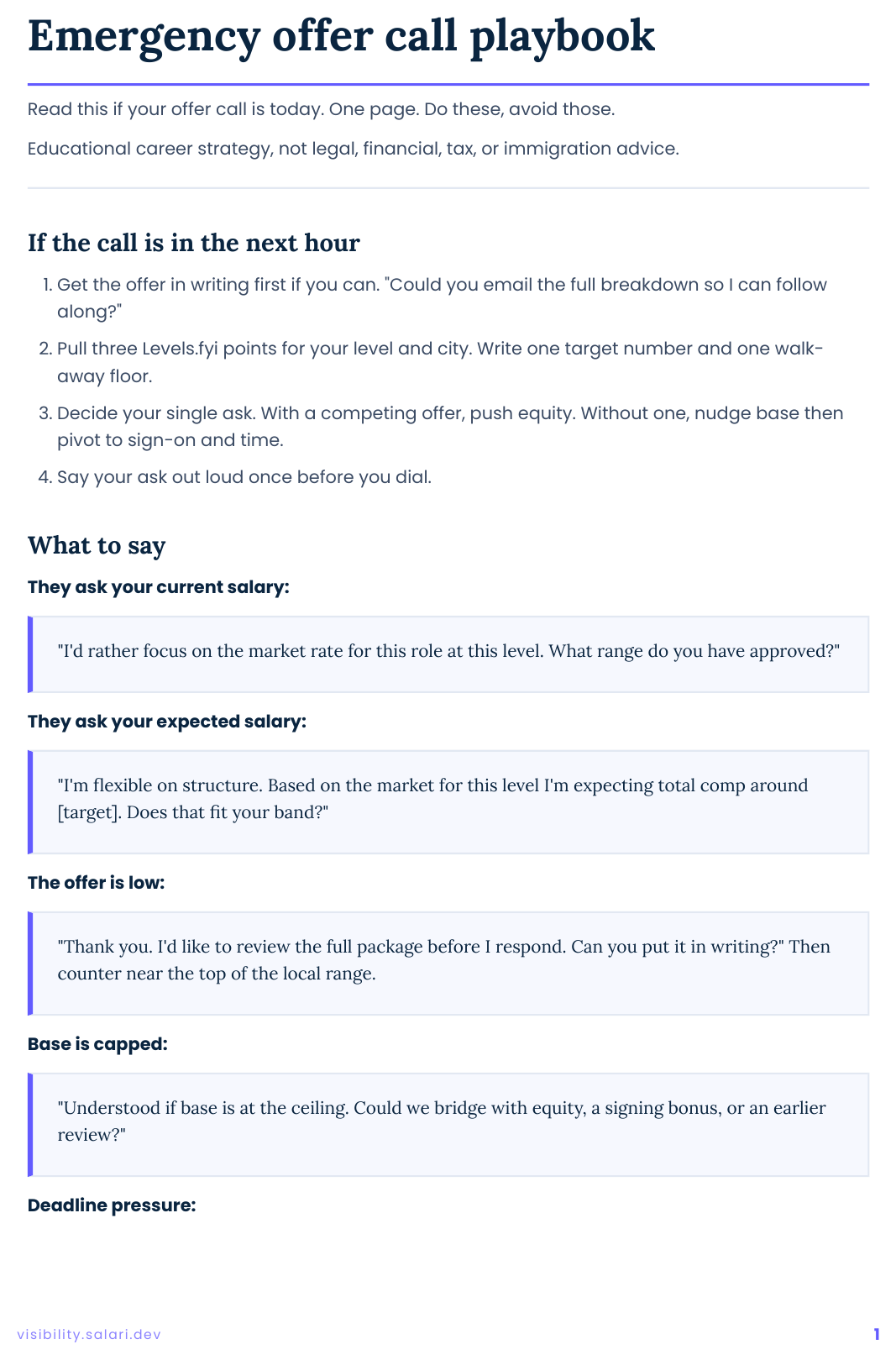
One page for when the offer call is in the next hour.
Every claim, with its link, access date, and confidence. Verify it yourself.
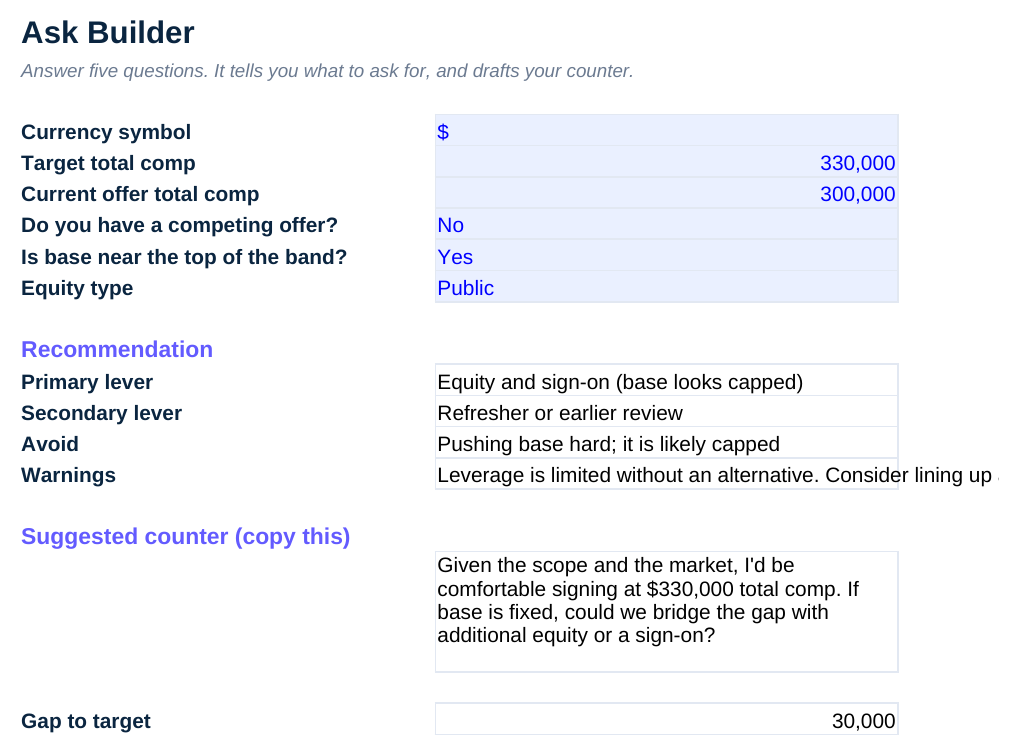
Answer five questions. The Ask Builder picks your lever, flags what to avoid, shows your gap to target, and drafts the counter line you read on the call. No more freezing.
These are screenshots from the actual handbook and toolkit you download. Nothing here is a mockup.
Salary is this year. Level is every year you stay. One level too low compounds into every raise, every stock refresher, and the next offer that anchors on this one. The toolkit models the full ten-year cost, with every assumption on the page, so you can argue level first and money second.
Open it the night before, or an hour before. Start to finish is about thirty minutes.
Drop base, bonus, equity, and sign-on into the toolkit and see four-year total comp, not just the headline number.
The Ask Builder shows which one has room, base, equity, sign-on, or level, and what to avoid pushing.
Take the exact counter line, plus responses for "base is capped," competing offers, and deadline pressure.
Walk in with your number, one ask, and the words ready. Say it once, then stop talking.
Compensation data is noisy, so every figure in the bundle carries a confidence label, and a full source appendix lists the link and access date for each claim. Trust nothing, verify everything.
Intent is everything here. This kit earns its price when you have a real offer conversation ahead, not before.
If one sentence gets you even $1,000 more in sign-on, equity, or base, this paid for itself many times over. A prep kit for the offer call, not another negotiation book.
The reported medians come from Levels.fyi and public sources, each labelled and dated in the source appendix. The before-and-after offer examples are clearly marked as anonymized composites built from real 2026 bands, never presented as named individuals.
Coverage is deepest for the US, UK, Europe, India, Japan, and Singapore, with regional scripts and country-by-country notes. Elsewhere, treat the ranges as directional and use the research workflow to get a local number.
Yes. Start with the 30-minute page in the handbook, or the one-page emergency playbook if your call is today.
No. It includes a worked offer teardown, a full annotated negotiation transcript, structured case studies, a transparent lifetime-cost model, and a spreadsheet that drafts your counter for you.
No. It is educational career strategy. Verify any number, and any legal, tax, or visa point, with a qualified professional.
An instant download: PDFs you can read anywhere and an .xlsx spreadsheet that opens in Excel, Google Sheets, or LibreOffice. Plus the free web calculators.
Open the prep room, model the package, choose one lever, copy the script, and walk in ready.